
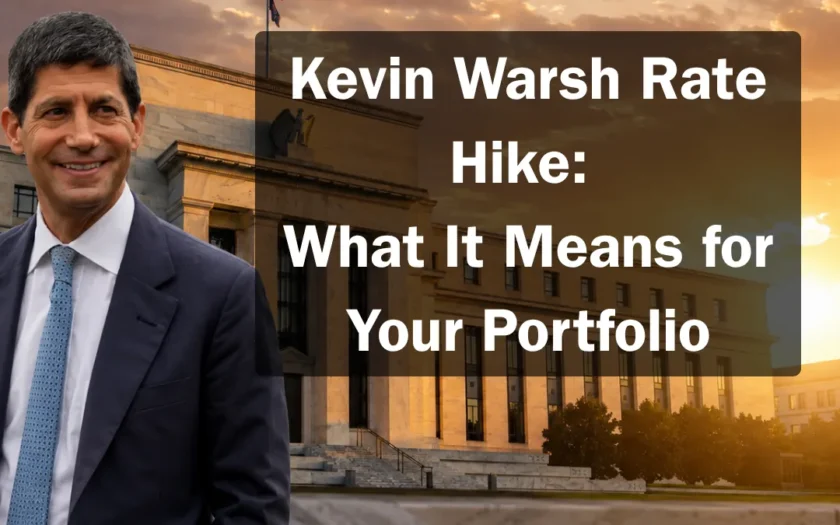
If you’ve been watching the markets this week, you’ve probably noticed the sudden nervousness in stocks, gold, and crypto alike. The reason traces back to one man: Federal Reserve Chairman Kevin Warsh. His latest comments on inflation have investors bracing for a possible Kevin Warsh rate hike as soon as next month, and the ripple effects are already showing up across nearly every corner of the market.
Whether your portfolio leans toward tech stocks, gold, Bitcoin, or plain old savings accounts, this matters to you. Let’s break down what Warsh actually said, why it’s driving so much anxiety on Wall Street, and what a Kevin Warsh rate hike could mean for the assets you already own.
What Did Kevin Warsh Actually Say?
Speaking at a high-profile gathering of central bankers and economists, Warsh delivered a message that was blunt by Fed standards. He acknowledged that recent economic data has come in better than expected, but he stopped short of declaring victory. In his view, the underlying inflation trend hasn’t shown the kind of meaningful, sustained improvement the central bank needs to see before it can even think about cutting rates.
That’s a notably different tone from what many investors were hoping to hear. Markets had been pricing in eventual rate relief, but a Kevin Warsh rate hike now looks more plausible than a cut, at least in the near term.
Warsh also drew a hard line on the Fed’s long-standing 2% inflation target, making clear it isn’t up for negotiation. Prices, he argued, need to come down to that level in a way that’s clearly sustainable — not just a temporary dip that reverses a few months later. Until that happens, he signaled the central bank has little appetite to loosen policy, and every reason to consider tightening it further.
Why a Rate Hike Talk Is Suddenly on the Table
Here’s the logic behind the shift. If inflation is still running hot by the Fed’s own measures, cutting rates would only pour more liquidity into the system — and more liquidity typically pushes prices higher, not lower. So instead of easing up, Warsh’s remarks suggest the Fed may need to do the opposite.
Following the speech, market-implied odds of a rate increase at the Fed’s September meeting jumped noticeably. Traders who had largely dismissed the idea of another hike are now treating it as a real possibility rather than a tail risk. That’s a meaningful shift in sentiment, and it’s the direct result of how seriously investors are taking this Kevin Warsh rate hike signal.
How This Hits the Bond Market First
Interest rate expectations show up almost immediately in short-term Treasury yields, and that’s exactly what’s been happening. Yields on 2-year and 3-year Treasury notes have been climbing toward some of their highest levels of the past several months, as traders adjust their bets on where the Fed funds rate is headed next.
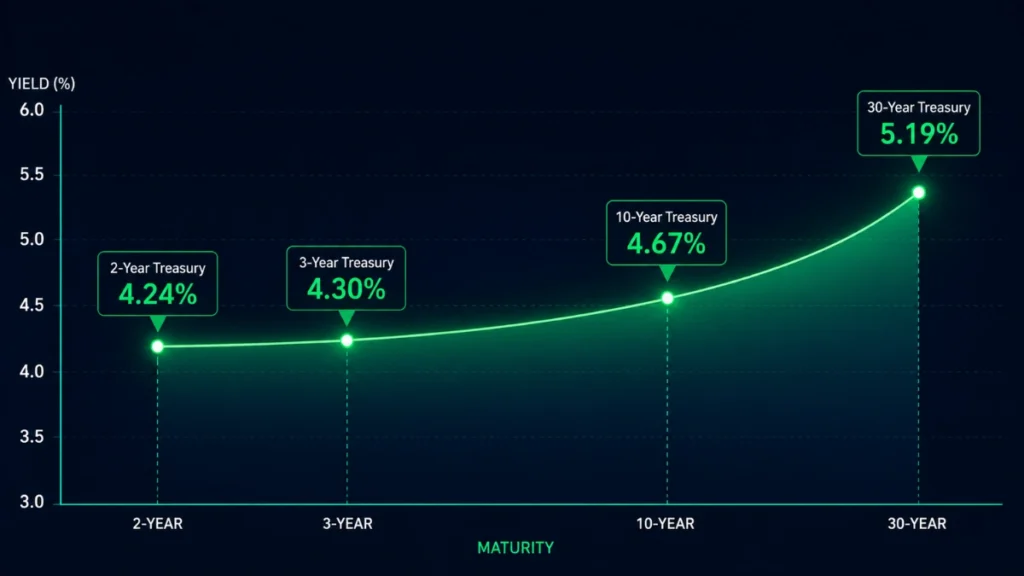
This matters more than it might seem at first glance. When short-term government bonds start offering meaningfully higher, essentially risk-free returns, money tends to flow out of riskier assets and into those bonds. Why take on stock market volatility when a U.S. Treasury note is suddenly paying you more with none of the downside? That single dynamic is a big part of why a Kevin Warsh rate hike conversation tends to spook equity investors.
What It Means for Stocks
Higher rates raise the cost of borrowing for companies, slow down consumer spending, and make future corporate earnings worth less in today’s dollars — all things that weigh on stock valuations. Growth stocks and highly leveraged companies are typically hit hardest, since their value depends heavily on cheap financing and optimistic long-term earnings projections.
If a Kevin Warsh rate hike does materialize at the September meeting, expect increased volatility across major indexes, with rate-sensitive sectors like technology and real estate likely to feel it first.
Gold’s Awkward Position
Gold doesn’t pay any interest or dividends, so its appeal drops when investors can earn a solid, guaranteed yield elsewhere. That’s the uncomfortable spot gold finds itself in right now. As short-term Treasury yields rise on rate hike expectations, some of the capital that had been parked in gold as a safe haven is likely to rotate toward Treasuries instead, where the same “safety” comes with an actual return attached.
Bitcoin and the Liquidity Connection
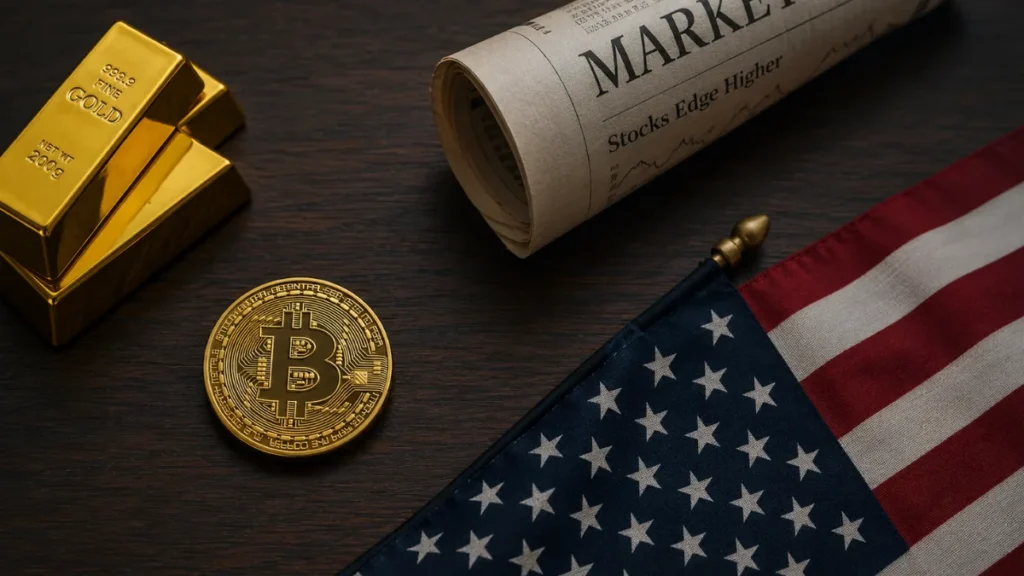
Bitcoin and other cryptocurrencies are often described as “risk-on” assets, meaning they tend to thrive when liquidity is abundant and cheap money is flowing through the system. A Kevin Warsh rate hike works directly against that setup. Tighter policy means less liquidity in the broader financial system, and historically, that has correlated with reduced appetite for higher-risk, higher-volatility assets like crypto.
Combine that with the pull toward short-term Treasuries, and you have two forces working against Bitcoin at the same time: less liquidity overall, and a more attractive “safe” alternative competing for the same capital.
What Should Investors Actually Do?
This is where it’s worth pausing. Nobody, including the Fed itself, knows with certainty what will happen at the September meeting. Warsh has been deliberately vague about the specific path forward, which is part of why markets are reacting so sharply to every word he says.
That said, a few practical takeaways are worth keeping in mind:
- Diversification still matters. No single asset class — stocks, gold, or crypto — is immune to a shift in Fed policy.
- Short-term Treasuries are back in the conversation. For conservative investors, yields near multi-month highs on 2-year and 3-year notes are worth a look.
- Volatility is likely to persist through the September Fed meeting, regardless of which way the decision ultimately goes.
- Watch inflation data closely. Warsh has been explicit that incoming price data, not calendar dates, will drive the Fed’s next move.
The Bottom Line
Kevin Warsh’s comments this week weren’t a formal policy announcement, but they didn’t need to be. In the world of central banking, tone and word choice move markets almost as much as actual rate decisions. By emphasizing that the Fed’s 2% inflation target is non-negotiable and that underlying inflation trends haven’t meaningfully improved, Warsh has effectively put a possible rate hike back on the table — and investors are repricing risk across stocks, bonds, gold, and Bitcoin accordingly.
Whatever your portfolio looks like, it’s worth paying attention over the next few weeks. The September Fed meeting is shaping up to be one of the more consequential ones in recent memory, and the market’s reaction to a Kevin Warsh rate hike decision could set the tone for the rest of the year.
This article is for informational purposes only and does not constitute financial or investment advice. Always consult a licensed financial advisor before making investment decisions.
About the Author – Abhishek Chouhan
Abhishek Chouhan is a Global Finance Analyst and Market Researcher with over 15 years of experience studying stock markets, investor behavior, and long-term wealth cycles across the US, Europe, and Asia. He is the founder of MoneyUncut.com, a global financial intelligence platform focused on decoding market psychology, economic trends, and how human behavior shapes financial outcomes.